
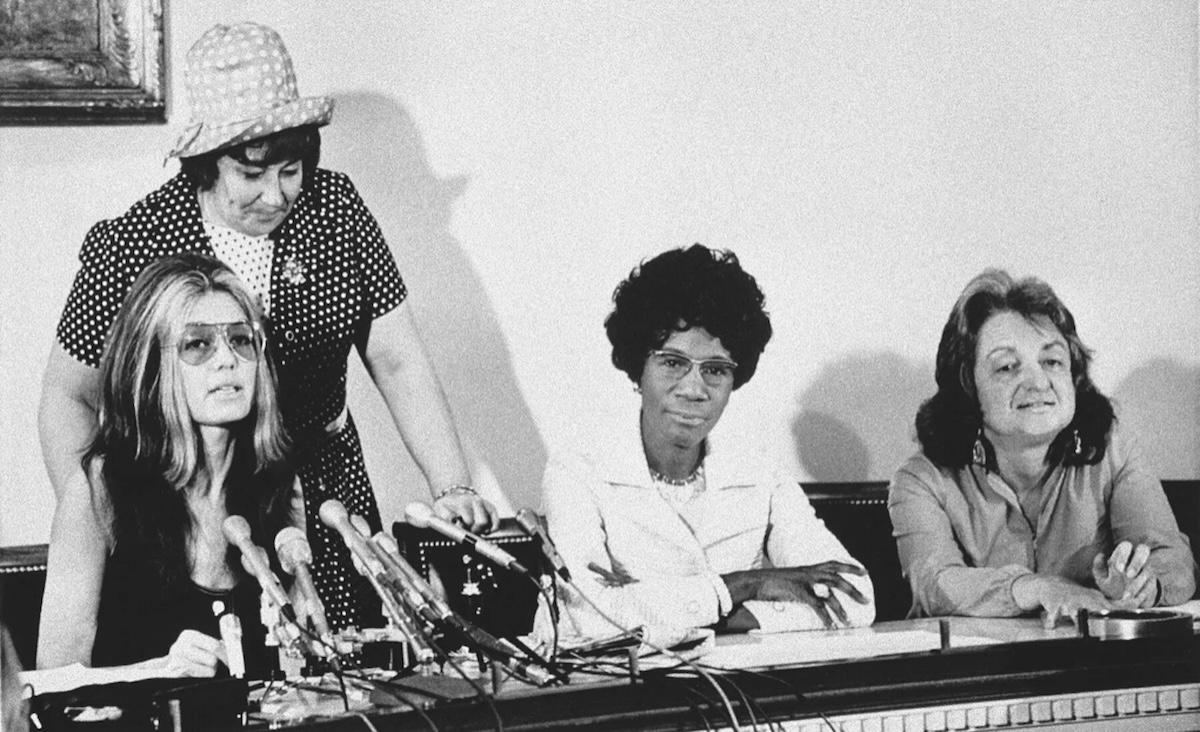

We are the glorias!
I posted this photo by Charles Gorry on Instagram last week, along with my thoughts and feelings about Gloria Steinem’s…
...
Last night, I watched an interview that Lady Gaga gave on the Late Show With Stephen Colbert, that was so incredibly clear about sexual trauma that it stopped me in my tracks. She gave the interview in 2018, during the time Dr. Christine Blasey Ford was testifying about whether or not a nominated Supreme Court Justice (whose name I don’t even want to mention, but you know who I’m talking about). was going to be approved by the Senate.
After identifying herself as a sexual abuse survivor, Gaga went on to talk about how trauma gets compartmentalized, gets put in a box and put away somewhere, so the traumatized person can carry on with their life. But years later, when something triggers it, the memories can come flooding back, and the box gets re-opened.
I’ve been hearing from people for weeks – mostly women – about how their well buried box of sexual assault memories was ripped open by the revelation of the lawsuit that Jane Doe has filed against Cornell University, the bar that served her, her sorority, and the 7 men who allegedly raped her. And since that revelation, there have been dozens more reports of sexual assaults on campuses, and the lack of the college/university administrations, or sometimes local law enforcement, to take action.
I learned the acronym DARVO – Deny, Attack, Reverse Victim and Offender – which one of the alleged perpetrators at Cornell has done. He has filed a counter lawsuit alleging that he was the victim. It’s clearly a common tactic, because there’s even an acronym for it. I’m not falling for the gaslighting.
A major part of any perpetrator’s defense against a victim concerns memory, because it is notoriously sketchy. Especially where trauma and/or assault are concerned, people often can’t remember certain details, or they mess up the chronology of what happened. These are completely normal responses to the shock and horror of the experience, and it’s compounded when drugs/alcohol are involved. But in over 30 years as a trauma therapist I know this: there is one part of memory we can count on – somatic memory. Our brains may have compartmentalized the chronology, because it’s too horrific to remember, but our bodies remember details connected to the senses – sight, sound, taste, touch, and hearing.
Just this past week, when we had strong Santa Ana winds here in SoCal, and fires started erupting, my body remembered having 10 minutes to grab my most precious items and flee a wildfire years ago. To this day, the sight of an extraordinary crystal clear fall day, when there is a bit of a chill in the air, can propel me back to being in NYC on 9/11. Or my family member told me that when had an MRI, in a nanosecond, he was back in the Vietnam jungle because the machine sounds like a M-60 machine gun.
The power of somatic and action-based therapy work is that even when the cognitive details of the event aren’t clear, when we slow things down and revisit the trauma as part of healing it – after extensive grounding and resourcing has occurred – the body still holds the memories: The smells, the sounds, the sights, the taste in their mouth, the touch of a surface…the memories resurface, so that they can come up, and out, in the safety of therapy, and healing can finally occur.
You may not remember, but your body does. And I believe you and your body.
_____________________________________________________________________________________________________________________________________________
About Jean:
Jean Campbell, LCSW, SEP, TTP, TEP has been bringing together groups of people to heal for over 31 years. She blends her extensive experience in psychodrama, sociometry, group psychotherapy, somatic healing and trauma resolution to offer training for helping professionals, personalized intensives, psychotherapy, clinical consultation, and leadership workshops. You can find her at theactioninstitute.com, on Instagram at @actioninstitute, and on Facebook at @actioninstituteofcalifornia.
This material may be protected by copyright.
I posted this photo by Charles Gorry on Instagram last week, along with my thoughts and feelings about Gloria Steinem’s…
...
As a follow up to my last post about chatbots, I’ve been thinking a lot about why they’re so popular,…
...