


The compartmentalization of trauma
Last night, I watched an interview that Lady Gaga gave on the Late Show With Stephen Colbert, that was so…
...
As a follow up to my last post about chatbots, I’ve been thinking a lot about why they’re so popular, and why so many people are turning to them instead of engaging in real relationships. Here’s my theory: it’s about lack of capacity to tolerate distress, and in such a stressful world, and a desire for the “easier, softer way,” as we say in the recovery rooms.
If you have a chatbot “companion” that agrees with you about everything, never challenges you, and never criticizes you, then you don’t have to experience “distress” or challenges that are normal in any real relationship (and please note that I chose “that” to describe the bot, because “who” is for people).
Distress tolerance is one of the four components of secure attachment, which manifests as the ability to trust people and rely on them as a result of safety and consistency in early relationships. Distress tolerance is a vital skill in relationships, in learning and mastery, and in order to take forward action in any area of your life.
Let’s quickly talk about all four components of secure attachment. In this discussion, I’m drawing from two of my somatic teachers, Kathy Kain and Steve Terrell, who co-wrote a wonderful book called Nurturing Resilience, about attachment, and healing from developmental trauma.
The first component of secure attachment is a safe haven. This is a sense of safety inside that results from having a caretaker who is safe, protective and consistent, and who the child can rely on. An example of how a child feels a sense of safe haven is when they call or cry for something, the caretaker responds consistently and reliably (what we therapists refer to as “call and response”) which allows the child to develop a sense of security.
The second component is a secure base, which means that the caretaker is a consistent form of comfort for the child when they are feeling distress. When the caretaker exhibits that consistency, it helps the child further develop a sense of security.
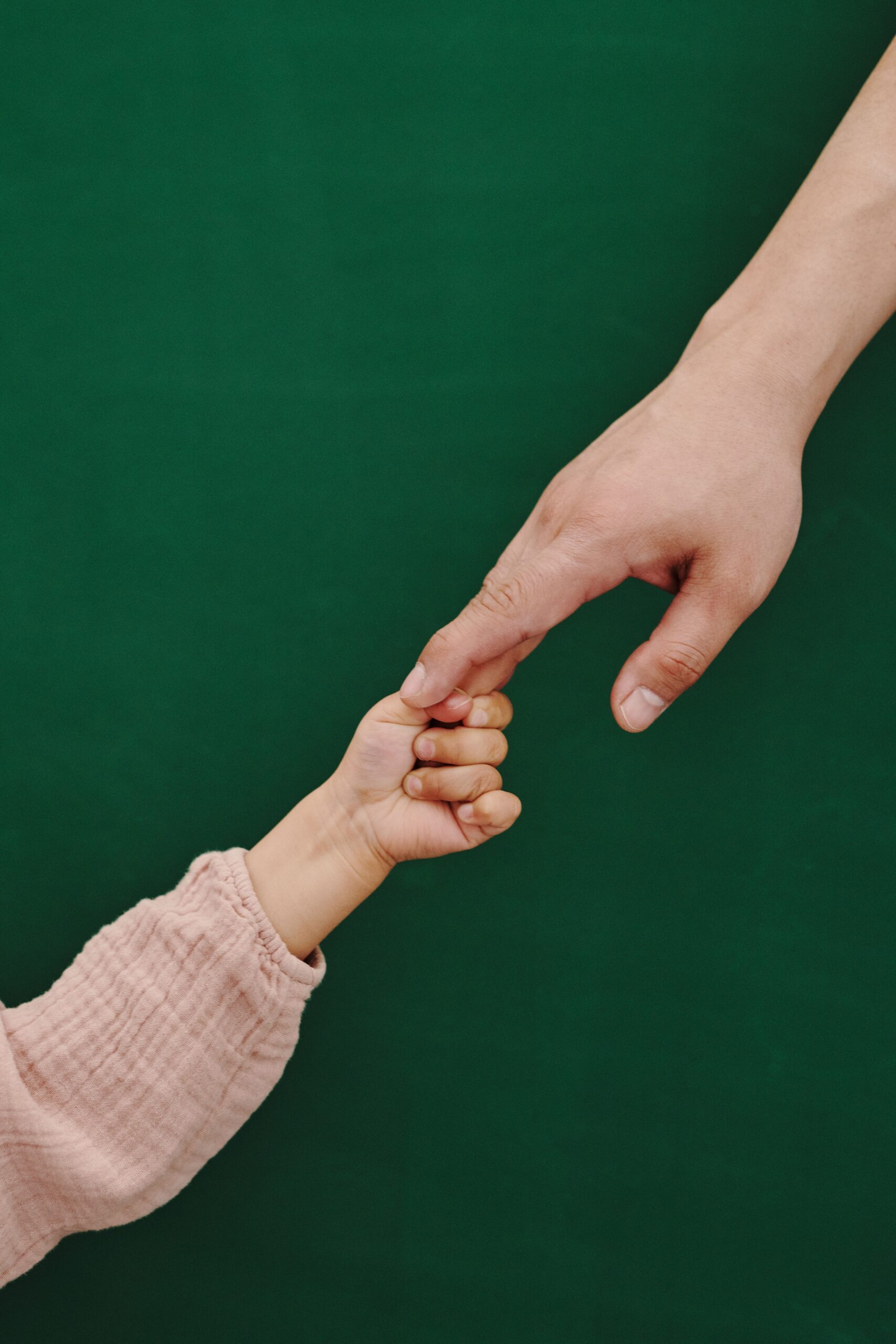
The third component is proximity maintenance, which is a process children go through when they move away from (crawling/walking), and then back towards the caregiver.
If the child feels secure in their relationship with their primary caretaker, they’ll start to toddle away because they’re exploring. But at some point, they will pause, turn around, and look back to make sure that the caretaker is there, and is paying attention to them. They are testing how far away from the caretaker they can go, and still feel a sense of connection.
If the caretaker isn’t watching, the child feels anxious, and so their plea to be seen and witnessed will get louder and more insistent.
“Mommy (Auntie, Daddy, Grandma), look at me! Watch what I’m doing.” And if the caretaker still isn’t paying attention, the child will anxiously run back to them because they are afraid their connection has been broken. That lack of consistency will lessen the child’s willingness to create more proximity or more distance, because they then feel like they can’t rely on the connection.
If the child is seen and witnessed, then they will likely feel safe enough to move even further away. And again, they will turn around and look back. And if the caretaker is paying attention, it allows the child to feel safe enough to continue to move away from, and explore.
The fourth component is distress tolerance, which basically means that you have the capacity to experience discomfort or anxiety, and recover relatively quickly. At this stage, the child or the teen is appropriately separating from the caretaker. They’re individuating, and starting to become their own person.
But if they reach their limit of emotional capacity when something happens, they know that if they need comfort and/or support, their caretaker will be available for them, and provide that familiar sense of safety and security.
If the child has been raised with secure attachment, they have internalized the safety, consistency and security of the caretaker, and they can operate in the world without them most of the time. But they also walk around with a deep knowing that if they need support, it will be consistently available.
The dynamic I’ve been witnessing in our instant gratification world, is that because of convenience, a lot of us don’t have to tolerate the same level of day to day (dis)stress nearly as much anymore – at least about day to day thing. If you have a question, google can provide an instant answer. You’re hungry? You can order in food or microwave something in two minutes. You want to watch something? You can stream it or rent it. Bored? Scroll on social media to pass the time.
Now, I’m going to sound like a really old lady right now, but when I was a kid, if I wanted something, I had to work for it, which meant I had to tolerate delayed gratification. My parents provided for my day to day needs, but when I wanted to buy something, I had to earn the money, or at least a portion of it, before my parents would chip in the rest – and only if they thought that what I wanted was okay to own.
For example, when I was a teenager, I wanted to buy a guitar. I went to a store with my Mom to look at which kind I wanted, and worked to save half of the cost, and my parents paid the rest. It took me months to earn enough – delayed gratification- but it was worth it to me.
When it comes to instant gratification, I’m not blaming kids or teens or young adults. I promise I’m not. I’ve worked with a lot of families over the years, mostly in substance abuse treatment centers, and the truth is, it’s often the parents who can’t tolerate watching their child struggle, and so they provide instant gratification for them. I’m not here to throw shade on the parents either. They can’t tolerate distress because they don’t have secure attachment from their own childhood trauma or challenges, and so they don’t want their child to suffer the way they did.
So instead of allowing their child to appropriately struggle, they step in and they “snowplow,” by removing obstacles from the child’s path. Or they are what are called “helicopter parents,” consistently hovering over their kids and taking care of everything for them, so the children don’t have to feel any stress.
But we owe it to kids to allow them to struggle in an age-appropriate way. They need to learn how to feed themselves, even if it means missing their mouth and having half their meal end up on their face.
Parents need to let them struggle with buttons and zippers so that they can dress themselves. Children need to be taught how to do things, and then parents/caretakers need to let them struggle with mastery.
Parents can and should be coaches, but if they do things for them that they should be doing for themselves, then kids are being set up for failure. I can’t tell you how many young clients I worked with in rehab who literally did not know how to make their bed, did not know how to do laundry, and did not know how to make a cup of coffee.
I’m about to make a very provocative statement, and I mean it to be, because it’s important to really think about this, and have conversations about it. If you deprive your child the vital capacity of learning how to tolerate discomfort so they can learn how to live in the world on their own, then that’s a form of child abuse.
There, I said it.
Distress tolerance is a critical skill that kids need to learn, and parents need to be able to manage their own distress tolerance to allow their kids to figure things out, and experience their own accomplishments.
Here’s a good guiding principle when it comes to allowing them to figure it out, once you’ve taught them how to do something:
Don’t offer help unless they ask for it.
Encourage them; tell them you believe in them; celebrate their successes, and comfort them when they’re experienced failures. But don’t do it for them.
I think of this a lot as a psychodrama trainer because while I’m here to teach and coach and support my students, the only way they get really good at directing psychodramas is the same way any of us got any good at it: by making a lot of mistakes, getting ourselves into jams that we have to learn how to get out of, having difficult experiences, and then seeking consultation with an experienced supervisor, who can help them learn how to do it differently next time.
It’s been a journey for me as a trainer, and I have both erred on the side of stepping in too quickly to help, and on the side of waiting too long, and having students feel like they were drowning. I don’t know that I will ever achieve the right balance, but I keep working at it in an effort to best help my students, and I’ve learned to remind them to ask for help if they need it.
Life requires that kind of trial and error, and if we don’t develop the capacity to struggle and get to the other side of it, then we will never risk and grow.
It helps to look at experiences as learning opportunities, rather than failures. That mindset shift can make all the difference.
My invitation is to ask yourself if you have the capacity to tolerate discomfort. Do you have support in your life to walk through stressful experiences and stick with it to get to the other side? Do you have someone – a therapist, a counselor, a trusted friend or a family member or a partner, a recovery group, a clergy member – to help you do that?
If you are in a parental or leadership role, do you have the capacity to tolerate the discomfort of watching your child or your employee, or in my case, your student, struggle through learning something? Are you available to support them without doing it for them? Do you have a place of support that you can go to, so that you can sit on your hands and let them figure it out rather than jumping in too soon, and doing it for them?
They deserve to keep striving and so do you.
__________________________________________________________________________________________________________________________________________
About Jean:
Jean Campbell, LCSW, SEP, TTP, TEP has been bringing together groups of people to heal for over 31 years. She blends her extensive experience in psychodrama, sociometry, group psychotherapy, somatic healing and trauma resolution to offer training for helping professionals, personalized intensives, clinical consultation, and leadership workshops. You can find her at theactioninstitute.com, on Instagram at @actioninstitute, and on Facebook at @actioninstituteofcalifornia.
Watch Jean’s TEDx Talk:
https://www.youtube-nocookie.com/embed/OdvErKtIVUE?rel=0&autoplay=0&showinfo=0&enablejsapi=0
This material may be protected by copyright.
Last night, I watched an interview that Lady Gaga gave on the Late Show With Stephen Colbert, that was so…
...
I posted this photo by Charles Gorry on Instagram last week, along with my thoughts and feelings about Gloria Steinem’s…
...