
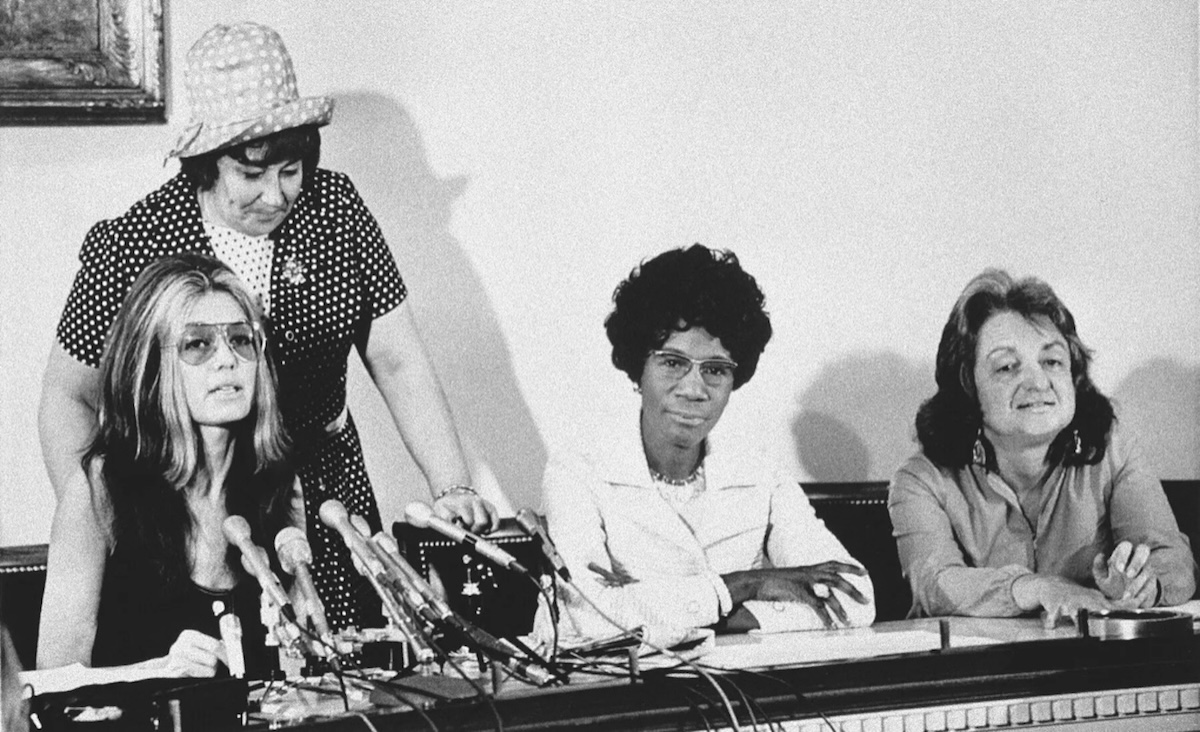

We are the glorias!
I posted this photo by Charles Gorry on Instagram last week, along with my thoughts and feelings about Gloria Steinem’s…
...
Addiction is a disease. Period.
It is recognized as a disease by the American Medical Association, the American Psychological Association, and associations and organizations all over the world.
It is a disorder that is caused by brain chemistry changes over time, and manifests as continuing to engage in obsessive and compulsive behaviors, despite negative consequences.
I know that the proper term for someone with a drug or alcohol addiction is a person with a substance use disorder, as a Psychodramatist Trainer and Practitioner, I know that addiction is just one role in someone’s repertoire. I mean no disrespect to anyone, however, I’m old school, because I’ve been sober a really long time, and so I’m going to use the terms alcoholic and addict.
I have an allergy to alcohol…at least that’s what I was told when I came into the recovery rooms over 31 years ago.
Typically, when you think of an allergy, you usually think of not being able to eat a certain kind of food without going into anaphylactic shock, like peanuts. Or you might think about having an airborne allergy like hay fever when there’s too much pollen in the air. When I looked up the term allergy in the dictionary, one of the definitions said that it’s “an abnormal response to food, drink or a substance.”
And I know – and every other alcoholic I know knows – that we have an abnormal response to alcohol. When I have one drink, my body craves more. My midbrain, which is where the pleasure center lives – the ventral tegmental area, or VTA – gets activated when I have a drink. And because my brain was conditioned over time to chase dopamine, I want more and more and more.
As an alcoholic, my midbrain operates differently than the people we call “normies” or civilians, because when I have one drink, I can’t stop. I don’t have the kind of control that someone who occasionally has a glass of wine does, or even someone who has a drink with dinner every night. They can stop, and I can’t.
There’s a saying in the recovery rooms that, “One is too many and a thousand is never enough.” One drink for me is too many, because it sets up a chain reaction that can’t be stopped.
I might be able to get away with having one for a couple of days, or a couple of weeks, or even a couple of months, but eventually that allergy is going to kick in, and I won’t be able to stop, which is why I don’t start in the first place. That’s true whether you have an addiction to alcohol, to certain foods, like sugar, to sex, to gambling, to debting.
There is no sense of moderation when it comes to these illnesses. Our brains work differently. And so, the alcoholic or addict really does mean it when they say, “I’m going to stop.” But they can’t – not without some kind of intervention.
That intervention might be a doctor telling them that if they don’t find a way to stop, they’re going to die. It might be a boss who tells them that they have to go to treatment to keep their job. And sometimes, it could be a systemic family intervention, where the whole family comes together to look at their own part in the progression of the illness, so they can heal both individually and collectively.
According to the Alcoholics Anonymous Basic Text, when alcoholics experience “restlessness, irritability, or discontentedness,” they turn to alcohol. As one of my family members says, “Have a feeling, have a cigarette. Have a feeling, have a drink.”
He’s right. Having a drink will calm his nervous system fast, because alcohol is a central nervous system depressant. When the alcoholic drinks, it floods their system with dopamine, temporarily calming and soothing them. And one of the reasons they turn to it is because it’s predictable. If they feel irritable, they have a drink and it calms them down.
With time, however, they start to seek that mood swing to feel normal. And eventually the addiction takes over and they can’t function without it. Their body relies on the outside substance, and eventually, the disease takes over and they spend their days thinking about it, using it and then recovering from it, whatever the behavior of the substance is.
Addiction develops over time. We develop a physical, emotional and spiritual dependence upon the behavior or substance. And one of the hallmarks of it is that people continue to use or drink – or whatever behavior they’re engaging – in despite negative consequences. Alcoholics and addicts don’t set out to harm themselves or anyone else, especially their family. When their brain is hardwired to turn to a substance, and the substance leads them to poor judgment, or lack of capacity to make clear decisions, and they can’t stop once they start, then families are going to suffer the results as well.
We’re gonna get into that more in the future episodes. But please know that addicts and alcoholics don’t mean to cause harm. They don’t wake up in the morning and think “How can I hurt myself and my family today.” They are caught in the throes of an illness.
Addiction has been highly stigmatized over the years, whether that’s an addiction to drugs or alcohol or sex or gambling. The truth is nowadays especially, no one is immune to become addicted. Even though you may not identify as an addict, you likely struggle with the obsession and compulsiveness of the disease and your inability to control it. And that’s because you have a smartphone.
Admit it, there are times you can’t resist looking at your phone when you hear the ding of an incoming text, or the sound of an Instagram or TikTok message coming through, or the chime of an email. And don’t tell me you don’t look at how many likes or comments you’ve gotten on a post. When you have a free minute, sitting at a red light or standing online at a coffee shop or waiting in a doctor’s office, you pick up your phone, right?
Just like with an addict, you can’t resist that hit of dopamine. The need to check the phone, has become a compulsion, and it leads people to be distracted around their spouse or partner, or their kids, or friends. That compromises the quality of their relationships, and leads to the important people in your life feeling disconnected, and not as important; not seen and cared for. And I have no judgment. I get it. I’m a recovering alcoholic, and know what it’s like to not be able to stop.
But the next time you have the thought that, “If they really loved me, they would choose me over the alcohol,” think about your own struggle to not pick up your phone.
Before you judge someone else’s addiction, please consider having compassion for them, and remember that if you could stop, you would.
I’d invite you to notice your own relationship with substances or behaviors, including with your phone, and see if you can make a slight shift. If your phone dings, can you finish the conversation you’re having before you’re checking it?
How much time are you scrolling on social media because it gives you a dopamine hit? How many times are you having that second drink when you told yourself you were only going to have one? When you lose a bet on a game, did you start planning for the next bet, so you can make back your money? Notice it and please be kind to yourself as you attempt to make a shift.
And if it’s gotten to the point where you can’t make that shift alone, I implore you to reach out for help. And if you need my help, feel free to send me a message.
_______________________________________________________________________________________________________________
About Jean:
Jean Campbell, LCSW, SEP, TTP, TEP has been bringing together groups of people to heal for over 31 years. She blends her extensive experience in psychodrama, sociometry, group psychotherapy, somatic healing and trauma resolution to offer training for helping professionals, personalized intensives, clinical consultation, and leadership workshops. You can find her at theactioninstitute.com, on Instagram at @actioninstitute, and on Facebook at @actioninstituteofcalifornia.
I posted this photo by Charles Gorry on Instagram last week, along with my thoughts and feelings about Gloria Steinem’s…
...
As a follow up to my last post about chatbots, I’ve been thinking a lot about why they’re so popular,…
...