
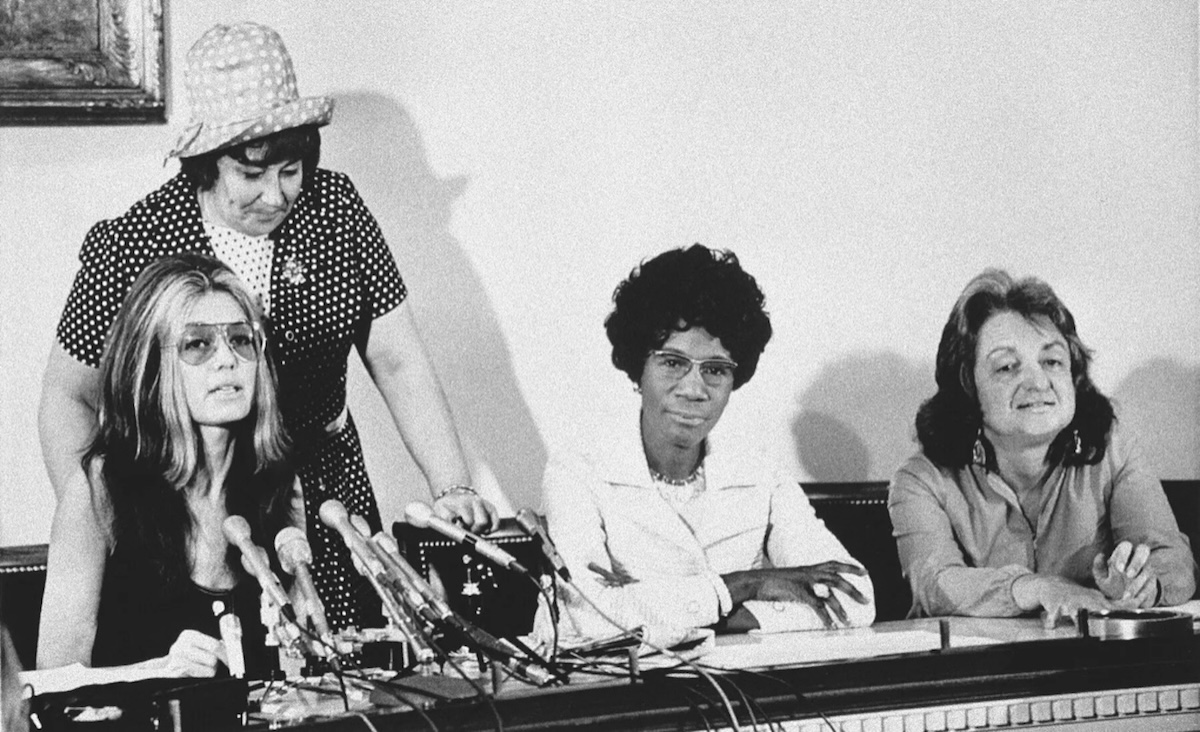

We are the glorias!
I posted this photo by Charles Gorry on Instagram last week, along with my thoughts and feelings about Gloria Steinem’s…
...
As a follow up to my last post on conflict, let’s look at fair vs. unfair fighting.We’ll explore the three main ways that people don’t fight fair, and then really drill down on one of them called Switchtracking.
Fighting fair requires focusing on one particular issue or concern at a time and staying open to your own feelings, and the feelings of the other person, rather than going into defensive mode.
A key to that is that both parties need to be available for the conversation when it happens.
Here are 3 major ways that people don’t fight fair.
1. Dredging up information from the past, which can also sometimes include score keeping. “I always do this,” or “I do this most of the time.” You can fill in the blank with what it is.
“I do the dishes 75% of the time.”
“I have to contribute 90% of the project we’re supposed to be finishing at work.”
“I always have to initiate our getting together or 80% of the time I do that.”
The way to deal with score keeping is to acknowledge it, and then redirect the conversation back to the subject or concern at hand. It’s tempting to go down that path, and allow yourself to argue about something in the past, but that won’t lead you to a solution about the thing the initial conflict was about.
One suggestion that I offer couples to say in a situation like that is, “Hey, I hear that you’re upset about this and I’m willing to have that conversation with you. Right now we’re focusing on this other thing, so I’d like to finish this conversation, and then we can set up a time to discuss the other thing you’re concerned about.
Rather than asking, “Are you available to have a conversation about this?” they launch into criticizing or giving feedback, and the other person hasn’t consented. When this happens, it often leads people to go into defensive mode.
Think of it from a railroad perspective: When you’re traveling down a track, you come to what is called a switch, which looks like a Y in the track. You can either continue forward on the track you’re on, or the switch can be shifted – which is what used to happen in the early days of railroading – so that the track actually shifts or switches to the other line in the Y.
In the case of someone being given feedback and trying to change the subject, they switch to the different track to evade receiving the feedback. Here’s an example.
Years ago, when I was managing a team in a corporate setting, there was an employee who reported to me, who kept making the same mistakes in his job. He had been taught multiple times what the process of completing the project was, and was supported in meeting his short-term tasks and goals. I told him over and over again that if he had any questions, to please bring them to my attention, and was happy to help him.
His performance was lacking, and so it got to the point where I had to set up what’s called a performance improvement plan (PIP), and address my concerns, so we could establish a clear plan with him to either meet the company’s goals, or make a plan for his exit. So I called him into my office to review the PIP, and started by talking about his strengths, and why I thought that with some additional focus and direction, he could be really successful in this position.
But as soon as I started discussing how to improve his work performance, he interrupted me and said, “Miranda’s been out sick four times in the last three months. At least I show up to work every day.”
Rather than taking the bait – which was so tempting – I replied, “You’re right in that you’ve had perfect attendance since you started working here, which is really admirable. However, we’re not here to talk about anybody else in the department. We’re here to talk about how you and I can work together, so you can be more effective at your job. So let’s come back to that.”
Most of us have likely been guilty of Switchtracking, and most of us have probably been on the receiving end of it, too. When confronted or given feedback – even if it’s delivered in a kind or loving or supportive way, and even if it’s appropriate feedback – people can have an impulsive response to go on the defensive.
It’s very common for someone to Switchtrack when they are caught off guard, or when they know they’ve done something wrong, and they don’t want to take responsibility for it. They do it when they don’t want to change.
In addition to the suggestions I’ve already offered, I also like to respond by saying something like, “I think we’re talking about two different subjects, and I’d appreciate it if we could talk about them one at a time, please. So let me get back to what we were initially discussing.”
If the person is upset about being confronted, they will at least feel like they’re going to get a chance to speak their truth after we address what I’m concerned about. And it’s a way to actually acknowledge both of the issues.
As you heard in the example of my employee, it can be helpful to acknowledge when the other person is right about part of or all of what they’ve said. That also helps to diffuse it, and it demonstrates that you’re open to the reality of the situation.
I had this happen fairly recently with someone when they asked me for feedback about something. After I confirmed that they were open and available for the feedback, I provided it, and I honored and acknowledged their courage for asking. And then when I did give the feedback, what I got back was them calling me out on something that they were really upset about, and they were right about.
So I apologized when I responded. I took responsibility for the part that was mine. And then I also responded to the rest of their comments in a redirecting way.
It’s so very tempting to go on the defensive, which makes me think of a quote by Holocaust survivor, psychiatrist, and creator of Logotherapy, Viktor Frankl:
“Between stimulus and response, there is a space. In that space is our power to choose our response. In our response lies our growth and our freedom.”
Sometimes I need to take a little bit of time before I can respond. Because like every other human being on the planet – well, maybe not like the Dalai Lama, I don’t know – but like most people on the planet, I can be reactive to things, especially if I’m in a place of more vulnerability or tenderness in our lives.
The pause is incredibly powerful. Just taking a moment to breathe, feeling your feet on the ground, and checking inside to see if you are available to have the conversation. If both people are available and willing and grounded in their bodies, then a discussion can actually become a collaboration rather than a fight. And it makes it easier to stay on track, which will more likely result in a solution.
So my invitation for this post is for all of us to pay more attention to when we Switchtrack somebody else; when we deflect in a conversation; when we’re feeling uncomfortable.
And if you are someone who tends to Switchtrack, what support can you get to be open to feedback? Do you need a pause when somebody confronts you or provides feedback? Do you need to say, “I hear you, and I need to think about that before I respond?” Or “I need to go get some support around this before continuing this conversation. I need to call my AA sponsor or my Al-Anon sponsor or my CODA sponsor. I need to have a session with my therapist. I need to journal about this.”
So you can say, “I hear you, I need some time, and here’s the time and day that I will come back to you.” And then be realistic with yourself about how much time you’re going to need to sort through it. Don’t tell someone you’ll come back to them in an hour when the truth is you’re going to need a day or two.
And if you’re on the receiving end of Switchtracking, you can do the same thing. You can say something like, “I hear what you’re saying, and I’d like to have a conversation about that, but in the meantime, we were talking about this. So are you available to talk about this? And if you’re not, I would appreciate it if we could set up a date to have this conversation.”
Conflict is inevitable, and resolution is possible.
I posted this photo by Charles Gorry on Instagram last week, along with my thoughts and feelings about Gloria Steinem’s…
...
As a follow up to my last post about chatbots, I’ve been thinking a lot about why they’re so popular,…
...