
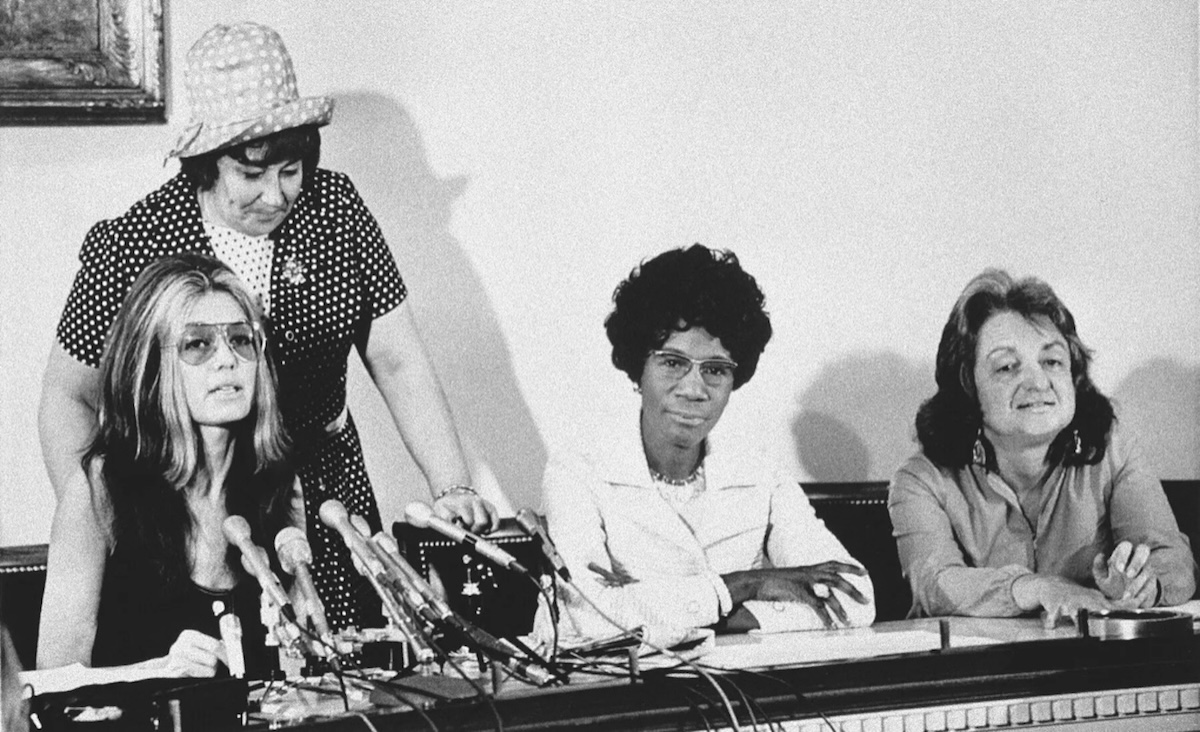

We are the glorias!
I posted this photo by Charles Gorry on Instagram last week, along with my thoughts and feelings about Gloria Steinem’s…
...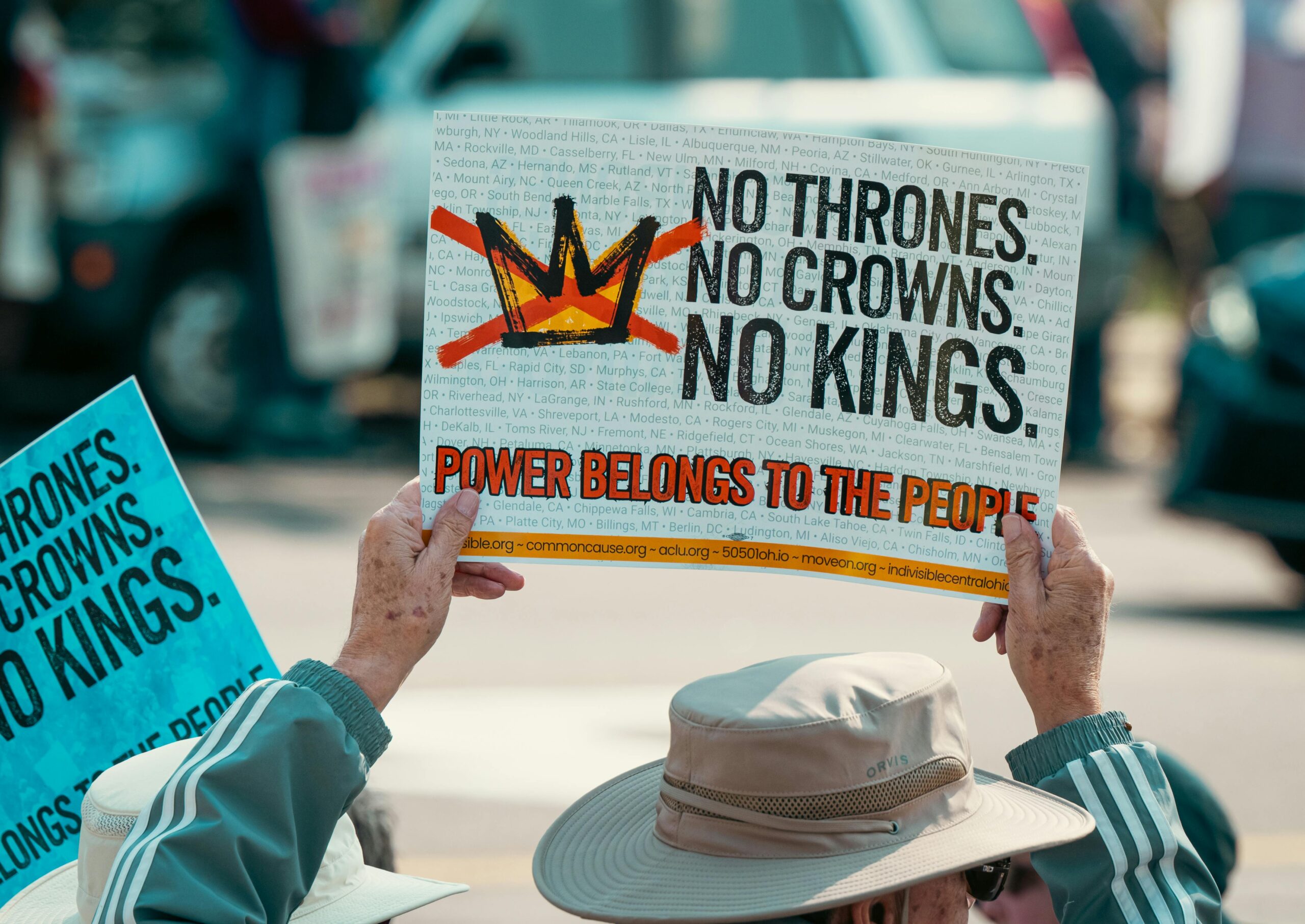
I read a Substack post this week by Dr. Pria Alpern, about a Wall Street Journal op-ed by therapist, Jonathan Alpert, in response to the third No Kings protest on March 28th.
As Alpern appropriately points out in her Substack article, protests amongst other things help people feel co-regulated and feel connected. People have been coming together for millennia to participate in rituals, and these types of gatherings are not, as Alpert said in his op-ed, “self-indulgent.”
Alpert, who by the way has a new book coming out next month entitled Therapy Nation, suggests in his op-ed that it’s a “waste of time,” to go to a protest like No Kings, and that it’s, “bad group therapy.”
A privileged white man suggesting that it’s a waste of time for people to be protesting about what is happening in this country? How cliché.
It’s ironic that the subheading of his op-ed is, “Participants in the rallies accomplish nothing practical but feel heard, validated and affirmed.” Seriously? You don’t have to be Irving Yalom to know that those three things are major goals of group therapy.
At a time when more and more, we are experiencing isolation; when many of us don’t know our neighbors well – or even at all – when we can feel very alone in difficult times, protests can help us feel validated and connected.
Moreover, protesting helps us to not feel crazy, because we have a felt sense in our bodies that we’re not the only ones who feel scared, or angry, or in grief – or all three of these – about what is happening. And we can feel empowered to take further action, knowing that others are in the fight with us.
I got curious about Alpert’s new book, and so I went on the Harper Collins Publishing website, and in the description, I found this:
“In today’s America, therapy is everywhere. Seeing a therapist is no longer taboo, and mental health resources are more accessible than ever. Yet despite this progress, anxiety and depression among Americans are now at record highs, and the country feels even more divided. It’s time to consider the possibility that we’ve become over-therapised, and examine how this practice, while intended to heal, may be making us weaker instead of stronger.”
I agree that the country is more divided. I agree that therapy is less of a taboo than it used to be, and more accessible – for some. The truth is, a lot of people can’t access therapeutic services right now, because they can’t afford it. And if they can – if they do have insurance – their benefits often only cover a limited number of sessions.
To say that anxiety and depression are at record high among Americans is because of therapy, is gaslighting, and it’s utter bullshit. These disorders – or what I would actually describe as appropriate responses to what is happening right now – are at record highs because the country is imploding.
People’s health care and food benefits have been stripped from them, or they can no longer afford their health care, because they have to choose between that and their essentials for living, like food and shelter. We are at war with Iran – whether the administration wants to admit it or not – and we now live with the threat of retaliation on US soil. Mass shootings are commonplace. People have lost their jobs because the economy is crumbling. The cost of living keeps rising. Gas prices are off the hook. And the list goes on.
And thank goodness that 1 in 50 people in this country didn’t agree with him. They showed up in 3,300 different towns and cities across the country (there were also protests around the world).
Let that sink in for a moment. 1 in 50 – or over 8 million – people in this country showed up to protest at last Saturday.
And we’re not just talking about blue states either. There were protests in very red states like Alaska, Arkansas, Louisiana, Montana, and South Dakota. The crowds in traditionally red cities like Boise, Idaho, and Salt Lake City, Utah were enormous.
I was at a protest in a very red area of Orange County, California, and was pleasantly surprised – actually, I was stunned – at how many people showed up. For blocks and blocks and more blocks, thousands upon thousands of people with signs showed up. And there were an enormous amount of cars honking in support as they drove by us.
It felt like good group therapy to me because I felt incredibly doubled, which is a psychodrama term which means someone who “gets you” so well they could speak for you. When someone feels doubled, they experience being seen, heard, and understood, which is yet another goal of group psychotherapy.
At last Saturday’s protest I was surrounded by other people who just “get it,” and as a result, I felt encouraged, empowered, and even joyful, which has been hard to hold onto in these last 15 months. And the people I was there with felt the same way.
As someone who’s been facilitating groups for over 30 years – and has been a group member for even longer – I know what good group therapy looks like and feels like. And I can say that this protest was one of the most rewarding, validating, and healing groups in which I’ve ever participated.
This material is protected by copyright.
_________________________________________________________________________
About Jean:
Jean Campbell, LCSW, SEP, TTP, TEP has been bringing together groups of people to heal for over 31 years. She blends her extensive experience in psychodrama, sociometry, group psychotherapy, somatic healing and trauma resolution to offer training for helping professionals, personalized intensives, clinical consultation, and leadership workshops. You can find her at theactioninstitute.com, on Instagram at @actioninstitute, and on Facebook at @actioninstituteofcalifornia.
I posted this photo by Charles Gorry on Instagram last week, along with my thoughts and feelings about Gloria Steinem’s…
...
As a follow up to my last post about chatbots, I’ve been thinking a lot about why they’re so popular,…
...