


Good Group therapy
I read a Substack post this week by Dr. Pria Alpern, about a Wall Street Journal op-ed by therapist, Jonathan Alpert, in response…
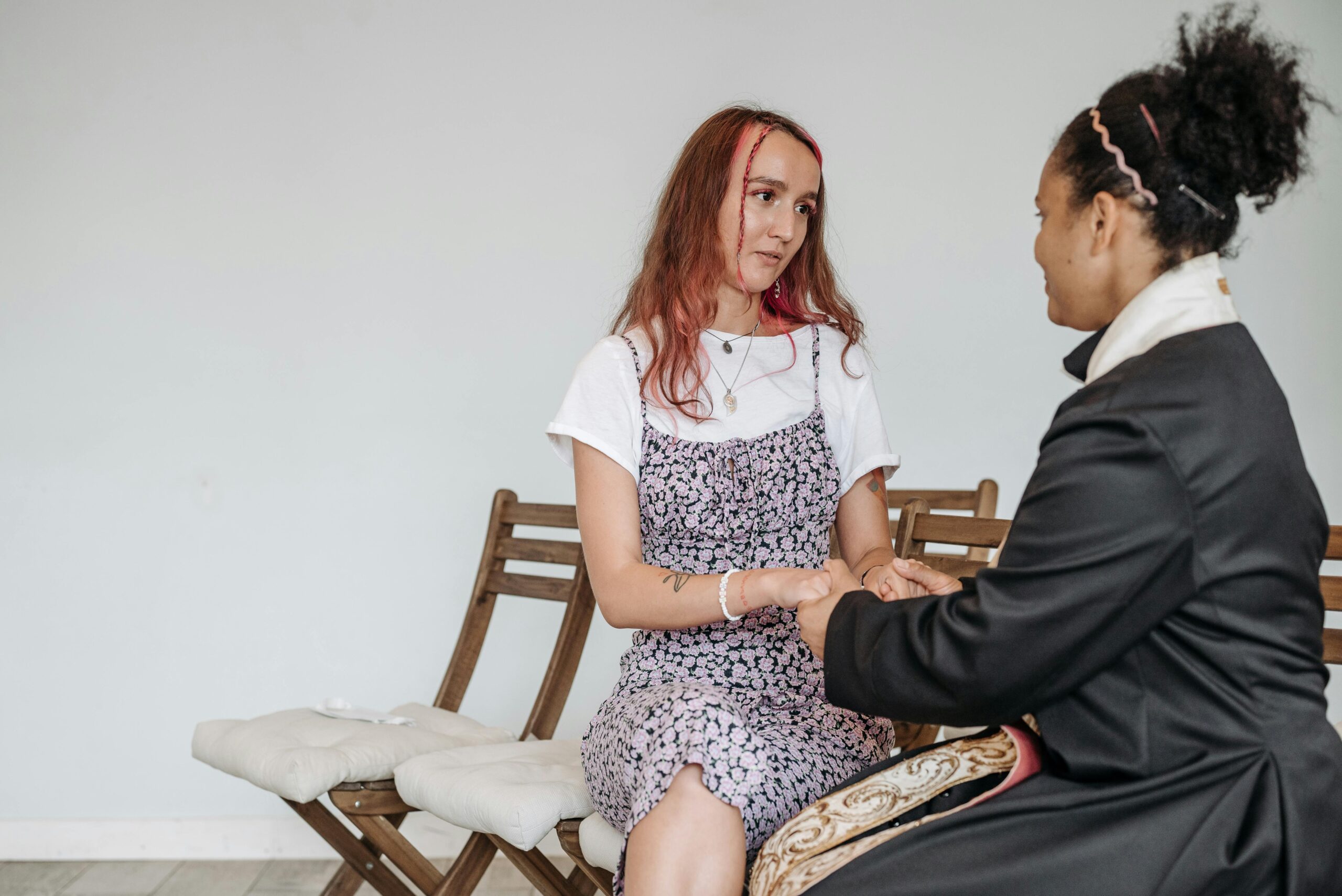
...
Conflict in any relationship is inevitable, and frankly, if you’re not having it from time to time, then it’s not an honest relationship.
The thing about conflict is that a lot of people avoid it. They pretend it’s not there, they shut down, they don’t address it, and they carry on as though everything is fine, even though it’s not.
Other people know it’s there and they suppress what they’re feeling. But it seeps out sideways through passive aggressiveness and sarcasm, and maybe by even giving someone the silent treatment.
And then there are the folks who come at conflict in an aggressive way. They go on offense by yelling and screaming, so they can intimidate, rather than taking any responsibility.
In all of these situations, people tend to use hyperbole. Did you see what I just did there? 😜
All of these situations. Hyperbole means things like always, never, the most, the least. Hyperbole can lead to resentment building on one side or the other or both people, and eventually, that energy has to go somewhere. People will either implode or explode. The question is, is there an effective way to deal with conflict?
And the answer, of course, is yes.
Which brings me to the incredibly brilliant technique that we use in Psychodrama called a Classical Encounter.
Now a little bit of history.
JL Moreno, who created Psychodrama, actually started it as a religion. It was called the Religion of the Encounter. And the main tenet of the religion that if we could step into the shoes of the other – then even if we didn’t agree – we could agree to disagree without having to hurt each other; without having to harm each other; without having to kill each other.
Most people don’t know how to be with conflict. And frankly, that includes a lot of therapists and counselors. My anecdotal experience is that most clinicians who don’t like doing couples or family work haven’t been adequately training to facilitate conflict resolution (and the truth is, because doing so requires clinicians to do a deep dive into their own family or origin work, they don’t want to do it!)
The majority of couples who seek treatment tend to get stuck in blaming.
“It’s your fault.” “It’s because you did this, or because you didn’t do this, or you said this, or you didn’t, or I wanted you to say that and you didn’t!”
Now, there’s a whole separate discussion about how people in relationships think the other person should be a mind reader, but that’s another topic for another podcast.
Let me start by stating the obvious – in order for resolution, both parties have to be willing.
If they are, then the goal of a classical encounter is to be able to step into the shoes of the other. But that does not happen overnight. Sometimes, that takes quite a bit of time, sometimes many months, or even years, depending upon the depth of trauma that one or both members of the couple has had.
But we have to start with each person getting into their own shoes.
When I do couples intensives – which means I work with one couple for a few days at a time – conflict has to start with each person being able to clearly state what their concern is, and be able to be present while they’re doing it. That’s what I mean by getting into their own shoes.
They need to be able to make “I” statements, not “You” statements. That requires each person to take responsibility for their own feelings, thoughts, beliefs and actions, which is much more challenging than blaming.
Part of how we do that is through the double.
When I’m working with a couple who is struggling with conflict – or anything else for that matter – I typically start by doubling each of them one at a time.
And by the way, when working with any 2 people in relationship in my work, they sit facing each other – not me. It shifts their focus to talking to each other, instead of about each other, which is the goal.
As a reminder, doubling is a psychodrama technique where, with permission, I stand behind someone – or sit behind them depending upon what their posture is – and I make a statement as though I am them, so they feel as though the words, the tone, and the affect of the statement are coming through them.
They then get to either repeat it, embroider upon it, or change it so that it fits for them.
For example, if someone involved in a conflict resolution says – and by the way, this could be partners, siblings, friends, coworkers, or a couple – if one of them says,
You don’t understand why I’m mad at you? You never think of me, you just react.”
That’s quite different than if I double them and say, “I’m feeling really hurt and discounted. We had already made plans, and I would have appreciated it if you had come to me to tell me that you wanted to change those plans because you had an opportunity that you didn’t want to miss out on.”
Do you hear the difference between those two?
In the first one, it’s blame and accusation. In the second one, it’s the person taking responsibility for their own feelings.
Now, the person that I doubled may want to tweak that statement so it fits better for them, and I want them to correct that and make it fit rather than just repeating it so that we know that it’s authentic. By them saying it from an “I” perspective rather than as blaming, it’s going to be much more readily received by the other person.
I also want to be clear that I’m not saying that someone else’s choices and behaviors can’t have an effect on you. Of course they can. I am saying, however, that no one can make you feel a certain way.
Your feeling is your response to what your partner has done or said, or not done or said, and making “I” statements about that requires you to take responsibility for your response.
Because most people come into couples work without the capacity to communicate effectively, I double them both. Doubling partner A, who will call Debbie, with an “I” statement. Having her correct or change or repeat it so it fits for her. And then doubling partner B, who will call Patricia, with an “I” statement. And allowing her to correct, change or repeat it.
An important point about working with two people in a session is that I don’t want polarity to set in. That is, I don’t want anyone feeling like I’m taking sides. So it’s vital that if I double one of them, I double both of them. That way, it feels more equitable, and I can substantially diminish the possibility of one of them feeling like they are the “problem” in the relationship, and diminish the chances that someone feels like they’re the one that’s “right” and the other person is “wrong.”
So in the beginning of couples work, I will likely go back and forth, and back and forth, doubling each one of them one at a time, so that they can learn how to better communicate with one another by speaking their true feelings and taking responsibility for their response, rather than assigning blame on their partner.
The next step in conflict resolution is for each member of the couple to be able to double the other.
Sometimes, I have to double each of them while they’re doubling their partner to help coach them on how to do it properly. So if Debbie is doubling Patricia (getting out of her seat and standing behind Patricia, with permission, to double what she thinks/feels might be going on inside of Patricia), I may need to coach Debbie on how to do that, rather than imposing her own agenda on her partner.
When Debbie doubles Patricia, Patricia can feel like Debbie “gets it,” because it feels as though Debbie is joining with her to speak her truth, rather than making a “you” statement, and assuming what Patricia might be feeling.
But here’s the sheer brilliance of this technique. When Debbie doubles Patricia, she has temporarily stepped into Patricia’s shoes, and she’s speaking to Debbie who’s over in the empty chair (that Debbie had been sitting in). So Debbie is actually confronting herself through “I” statements that she’s making for Patricia.
This can also reveal the assumptions people might have, because if Debbie doubles Patricia, she would be doubling potentially what she thinks Patricia might be thinking or feeling. And when Patricia alters the doubling statement to make it fit for her, Debbie then gets greater clarity on Patricia’s truth, rather than on the story that Debbie has been making up in her head about her partner.
Sometimes when we deal with conflict, we need to encounter what we in Psychodrama call “Ghosts.” Does your partner sometimes get upset with you and it reminds you of one of your parents? In that moment of conflict then, you’re likely seeing hearing the “Ghost” of your parent, and not your partner.
That’s what we call having a transference on someone – meaning unexpressed feelings from the past being projected onto someone in the present. In a Classical Encounters, we can use props and empty chairs to represent that “Ghost” so that we can work to clear those transferences, and the energy that goes with it and the memory of what was said or done.
In many Classical Encounters I have facilitated, the two partners will identify the people and messages that are sitting in the middle of their relationship: A parent’s judgment about the partner you chose; your religion telling you should or shouldn’t do something; issues around money or sex (sometimes including a prop or scarf or chair to represent a sexual perpetrator); fears and resentments, etc.
We have to clear these people and things and feelings out of the way so the partners can actually see one another, because in an honest to goodness conflict with someone, the only way to work it through is to be able to see them, not whoever the Ghosts are that you’re projecting onto them.
There are a lot of skills that go into facilitating a solid conflict resolution session, and depending upon what the conflict is about, or how much capacity the partners have, how much transference there is, etc, it might take many sessions to work it through. But it is workable if both partners are willing!
The final step is role reversal, where Debbie can fully step into Patricia’s shoes without losing herself, and Patricia can fully step into Debbie’s shoes without losing herself. That can take some couples years to do, and so we take our time chipping away at the transferences and the tendencies to blame instead of taking ownership. and we celebrate every milestone of growth along the way.
So the good news is that conflict resolution is possible. I promise you it is.
The bad news is most people – and even most clinicians don’t know how to do it very well, which is why we all need help in this area. It’s why I’m also dedicated to letting people in conflict know that this can be available in a therapeutic setting – if you’re working with someone well trained in this technique.
If you’re a clinician, you probably never got taught how to facilitate a good, clean, solid conflict resolution session between two people. I certainly didn’t learn this in graduate school, or when I was completing my clinical practicum hours. I learned it in my psychodrama training. And it’s a big reason why I’m so dedicated to teaching other clinicians how to do it – because it’s a really important skill, particularly if you’re working with multiple members of an organization or a family or a group, and obviously with couples. Or even quite frankly, when you’re working with an individual client and they need to have an encounter with a part of themselves.
My invitation for this post is to ask you to think about this: Are you sitting with a conflict that you haven’t told the truth about with someone in your life? And what support might you need to do that?
If you need to resolve a conflict, do you have somewhere you can go to help you resolve it? If you don’t, feel free to reach out to me.
And if you are a clinician who wants to learn how to facilitate healthy conflict resolution, hit me up. I want to help.
This material is protected by copyright.
_________________________________________________________________________
About Jean:
Jean Campbell, LCSW, SEP, TTP, TEP has been bringing together groups of people to heal for over 31 years. She blends her extensive experience in psychodrama, sociometry, group psychotherapy, somatic healing and trauma resolution to offer training for helping professionals, personalized intensives, clinical consultation, and leadership workshops. You can find her at theactioninstitute.com, on Instagram at @actioninstitute, and on Facebook at @actioninstituteofcalifornia
I read a Substack post this week by Dr. Pria Alpern, about a Wall Street Journal op-ed by therapist, Jonathan Alpert, in response…
...
We don’t mean to do it. It happens automatically. When we meet someone we don’t know, we make assumptions. We…
...