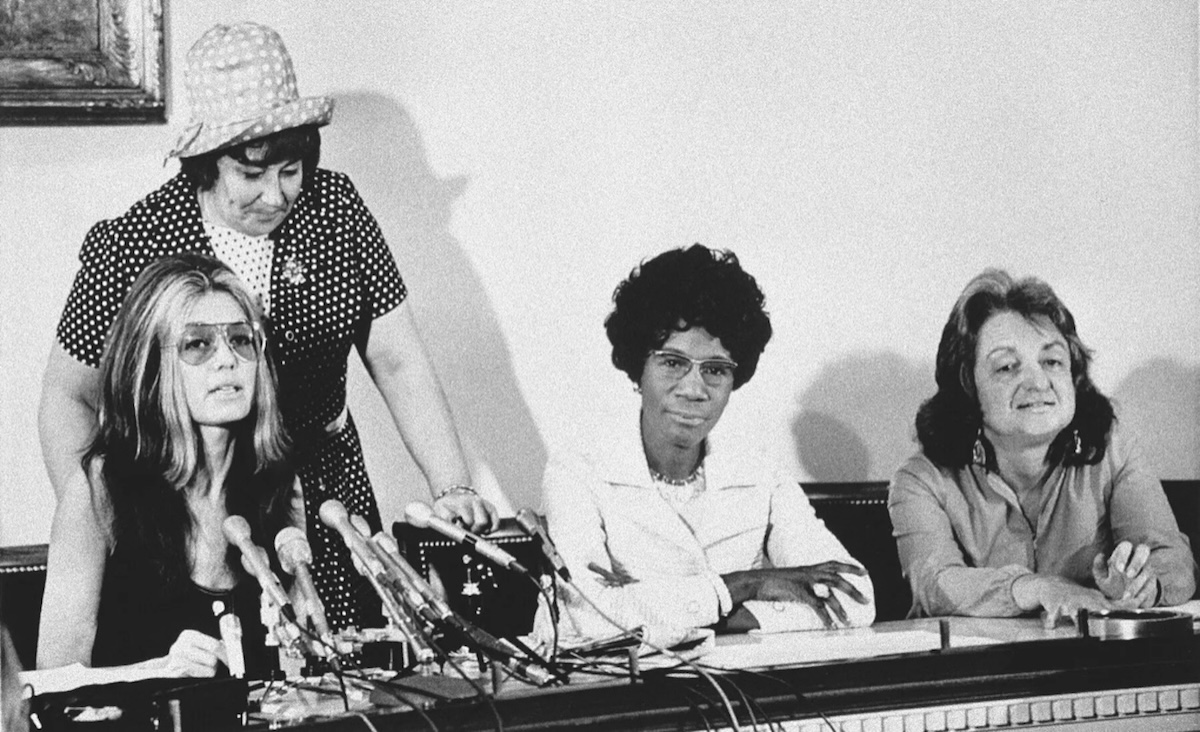

We are the glorias!
I posted this photo by Charles Gorry on Instagram last week, along with my thoughts and feelings about Gloria Steinem’s…
...
The hero child’s job is to make the family look good.
They excel at school. They typically have a high GPA. They’re the best in their extracurricular activity, like being captain of the women’s softball team, or quarterback of the football team, president of their class, or editor-in-chief of their school newspaper.
They’re popular, have lots of friends, and they do everything perfectly. People look at them and think, “This family must be wonderful. Just look at their oldest. She’s amazing. “
The phrase that comes to mind for hero role is, “I’ll take care of it.”
When addiction invades a family system, there is a vacuum. The chief enabler is over-focused on the addict, and not taking care of the family, so the hero child steps in to take care of everyone else, and ends up neglecting themselves. They are valued for what they can do, and not for who they are, meanwhile, they feel like they’re drowning.
The hero child, who is most often the eldest female (although not always) comes home from school and in addition to doing their own homework to keep up their grades, takes care of the household by making dinner, doing laundry, grocery shopping, supervising the other childrens’ homework, bathing younger siblings, and getting them to bed on time. They make lunches for the next day, and make sure everyone is up on time to get to school each morning.
Because their parents are not tending to the family, the hero ends up becoming what we call the parentified child. They step into the role of the parent at a ridiculously young age, because someone has to do it. They learn quickly that they can’t ask for help. Help isn’t available from their parents, their younger siblings are too young to help, and they can’t ask for help outside the family, because it would be too shameful to reveal that their family is in chaos.
So they just carry on as though everything is fine. When they take charge of caring for younger siblings, sometimes those siblings can rebel. They may start to get resentful that their big sister or brother is acting like their parent.
“Who are you to tell me that I have to do my homework? You’re not my mom!”
And so the hero child gets stuck between the parents who are supposed to be taking care of them, and their siblings that they feel obliged to take care of. Without the support from the parents, kids will typically stick together, but in this kind of a system, the hero child ends up alone.
Perfectionism begins to take its toll. It’s great when kids excel, but their drive to be perfect and get straight A’s, but it just becomes too much.
Because heroes often suffer in silence, the stress of carrying all of these burdens can sometimes lead to addiction too, like drinking or using drugs. They’re also more inclined to self-harm through things like cutting or trichotillomania – which is hair pulling or excessively tweezing their eyebrows. Eating disorders are also quite common in hero children, which can show up as anorexia, binging or binging and purging, through things like vomiting, laxatives, amphetamines or even exercise. Nobody has a perfect body, but in a family that feels out of control, starving themselves – or binging and purging – gives the hero the perception that at least they’re in control of something.
They will grow up continuing to struggle with perfectionism, including being horribly self-critical. They often will not let themselves take risks or try things, because if they can’t do it perfectly, they don’t want to do it at all. And if some of the characteristics I’ve talked about sound familiar, that’s because hero children often become chief enablers, like I talked about in a prior post.
They will also often unconsciously choose a partner who has an addiction, because taking care of someone feels familiar, and they can feel needed.
This child looks like they’ve got it all together, but like everyone else in this addicted family system, they need help. As a recovering hero child myself, I had deep shame when I couldn’t control everything and couldn’t take care of everything and everyone.
To this day, it’s sometimes still hard for me to ask for help, or to admit I don’t know something. That hero role runs deep, and control is still one of my default behaviors.
It’s been a long road of healing to get to a place where I can make mistakes, and accept that I’m human, not perfect. When I make mistakes that cause harm to someone else, I, of course, make amends. But hero children know that admitting they’ve done something wrong can bring up shame.
I needed to learn that it’s okay to tell the truth in safe places like therapy, and recovery meetings. Because the hero child’s childhood was stolen from them by the disease of addiction, they desperately need to be given permission to actually be a child. Psychodrama and improv have both helped me with that, but I still struggle to play.
I grew up being very serious because addiction is very serious. And while I love to have fun, for a lot of hero children like me, it can still feel scary sometimes, because there’s no controlling it. That’s the good news and the bad news.
I know I’m not the only recovering hero child out there, and so I hope we can all learn to let go, have fun and let other able-bodied and able-minded people be responsible for themselves, rather than feeling like it’s our responsibility to take care of them.
So my invitation is to ask yourself if you are someone who struggles with perfectionism. And if you are, has that resulted from growing up in an environment where there was addiction, or mental illness, or divorce, or something that led you to feel out of control?
Know that wanting control is a completely normal reaction to chaos – especially if it happened to you as a child. Are you willing to take one tiny step to start to let go of that? Just notice what comes up in your body when I even ask you to think about that. And then take a breath…and then another one.
You’re not perfect, and neither am I. We’re human, and our humanity is beautiful.
About Jean:
Jean Campbell, LCSW, SEP, TTP, TEP has been bringing together groups of people to heal for over 31 years. She blends her extensive experience in psychodrama, sociometry, group psychotherapy, somatic healing and trauma resolution to offer training for helping professionals, personalized intensives, clinical consultation, and leadership workshops. You can find her at theactioninstitute.com, on Instagram at @actioninstitute, and on Facebook at @actioninstituteofcalifornia.
I posted this photo by Charles Gorry on Instagram last week, along with my thoughts and feelings about Gloria Steinem’s…
...
As a follow up to my last post about chatbots, I’ve been thinking a lot about why they’re so popular,…
...