
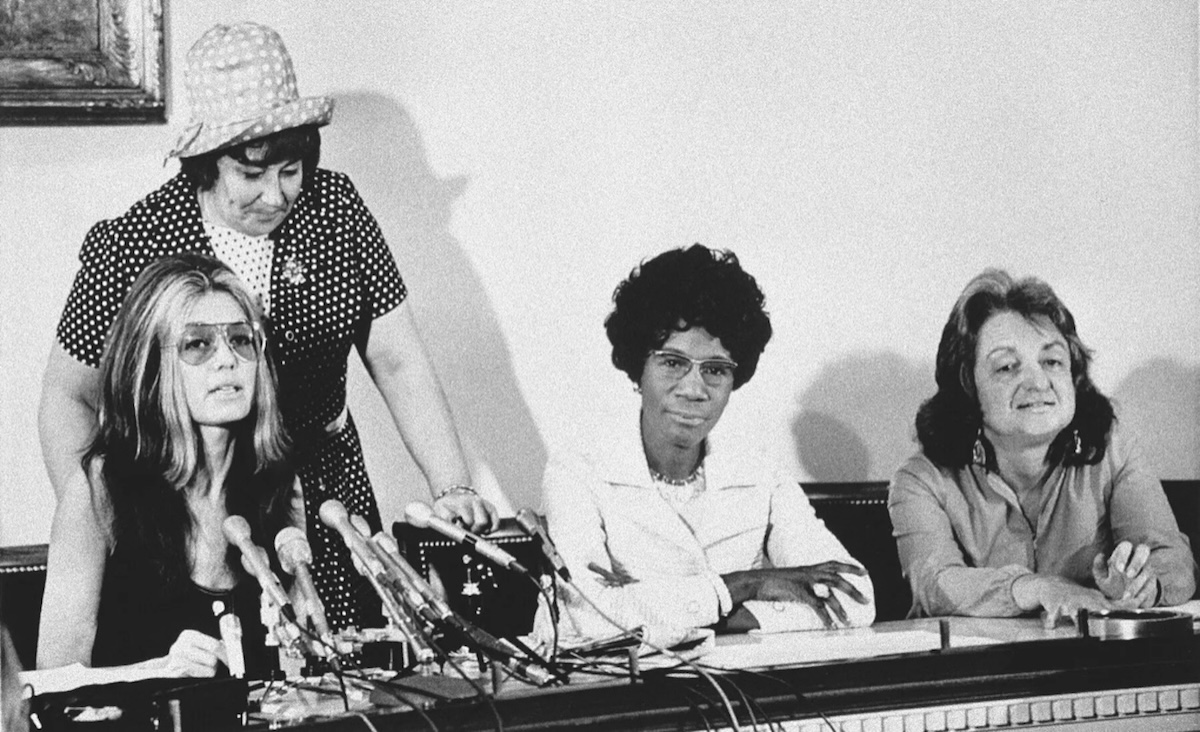

We are the glorias!
I posted this photo by Charles Gorry on Instagram last week, along with my thoughts and feelings about Gloria Steinem’s…
...
We don’t mean to do it. It happens automatically. When we meet someone we don’t know, we make assumptions.
We make up stories about them. We put them into categories or boxes. Because our survival instincts kick in, and we have to quickly determine whether we’re safe or not.
And for many of us, when we meet new people, we hold back. We don’t share much about ourselves, because we’re too busy asking ourselves, “Are these people safe? Will I be judged or misunderstood?
We make quick assumptions based on how someone looks, how they carry themselves, how they speak, how they dress. And when it comes to revealing ourselves, our fear of rejection or judgment gets in the way.
Much of the time, though, initial impressions are wrong. For example, despite what many people think, because I do a lot of presentations in front of large groups of people, and I lead groups all the time, when I go into a space where I don’t know anyone, I’m actually pretty shy.
I feel lost, and anxious, because I don’t have a role, and I’m not in charge. And so people have sometimes perceived me as being standoffish or snobby, when the reality is I’m just uncomfortable.
And when people don’t come talk to me when I’m the new one in the room, I have my own set of judgments that I make as a way of protecting myself. I immediately assume they’re jerks or they’re snobs, when they may be just as nervous about meeting new people as I am.
One of my favorite quotes about this dynamic is from the late Psychodramatist Dorothy Baldwin Satin, who always used to say, “if you don’t reveal yourself, people will invent you, and they’ll get it wrong every time.”
How do we get to know people so we can stop making up stories about them? How do we reveal ourselves at a safe pace that allows us to warm up to others without revealing too much, too fast? In my line of work, we do it through a method called Sociometry.
Sociometry is an action-based technique that helps us feel into the positive, negative and neutral connections in relationships, and helps shift them. JL. Moreno – the creator of Psychodrama and Sociometry – identified what he called tele, which from the Greek means, “At a distance.”
What it is, is an unspoken, reciprocal energy between people. It’s a phenomenon that happens unconsciously when people meet each other.
Sometimes there is an instant connection in a positive way. Someone might think, “Wow, I really like this person. I want to get to know them better.” We’re not talking about a romantic or sexual connection (although that can be true, too); we’re talking about a pull towards someone. In Sociometry, we call that positive tele.
Sometimes there’s an instant aversion, or a desire to pull away from someone, where you might think, “Nope, I don’t want to be anywhere near that person.” In Sociometry, we call that negative tele.
Most of the time, what happens is that we have a neutral connection, which means you don’t have a charge or a pull one way or another.
You might meet someone and think, “That person seems okay,” and with time, that pull towards or away from might change. But for now, it’s neutral. In Sociometry, we call that neutral tele.
So when I use sociometry in my work, part of what I’m doing is helping people find the things that they have in common with others. The goal is to build positive tele, so they can relax, and lower their anxiety, and that allows them to actually get to know people, rather than making up stories about them.
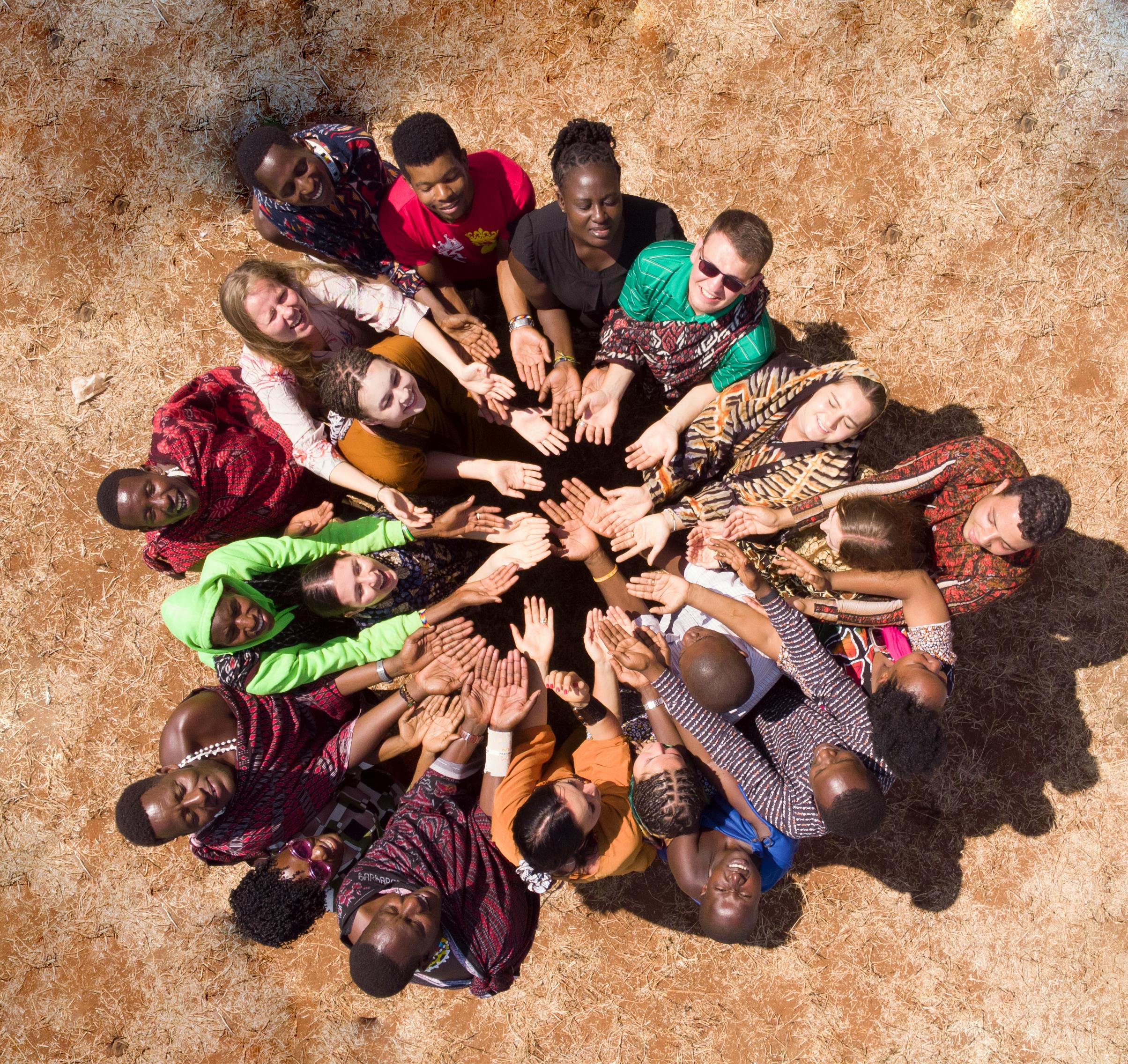
One of the sociometric exercises I use to facilitate that is something we call Step In Sociometry. We start by having a group of people will stand in a big circle. Then anyone can step in to the middle and name something about themselves that they’re curious to know if others in the group having in common. If anyone in the circle does have that in common, and they’re willing to reveal it, they would also step in to the circle, and then people share about why they stepped in.
To give you an example, a few years ago I was doing a presentation at a conference, and I was facilitating this exercise with about a hundred people in the room. We formed a very large circle, and I started off the exercise by stepping in myself and saying, “I’m currently living in a place other than where I was born.” A bunch of other people stepped in, and I started the sharing by saying, “I was born New York, but now live in California.”
Others shared where they were born and where they were living, and then everyone stepped back so that we could move on to the next person stepping in and naming something about themselves. When we begin this type of sociometric exercise, it’s important to start off with something that’s not too intimate, to pace how much people reveal about themselves. As we day in Sociometry, we work periphery to center – that is, we start with exercises that all people to warm up to more connection, and thus more safety.
Some of the next things people stepped in and said were things like, “I have a pet,” or “I have children.” “I love to travel.” Each time, those who stepped in to join the person who named something about themselves also shared.
All of those are pretty non-threatening and generalized questions, and so there was already some ease building in the group.
About five questions later, someone stepped in and said, “I’m a beekeeper,” and much to his pleasant surprise, there were about six other people in the room who also stepped in because they, too, keep bees. They took turns sharing what it was like to keep bees, and the joy at finding others like themselves was palpable.
That’s not the kind of thing that’s going to come up in people’s day-to-day lives and conversations, but once we know we have that in common, there’s a kinship that can form and an opening to connect more.
On the next round, someone stepped in and said, “I’m a veteran,” and the other veterans in the room stepped in and identified which branch of service they’d been in and where and when they had served.
Sometimes people will step forward and say things that are more intimate, like, “I’m a cancer survivor,” which is why it’s important that people know they have a choice about whether or not they decide to step in, because there may be some things that people aren’t ready to reveal.
The sharing on this type of criterion tends to be deeper and more tender, and because this criterion was asked later in the exercise, people had sufficient warm up to feel safe enough to share it.
What Sociometry reveals to us is that there are things that are going on in a group, or a family, or a classroom, or an organization, or a community, that are what we would call the covert structure, or the hidden structure of the group. There are commonalities we have with other people that aren’t evident on the surface.
When we reveal them, however, it can give us the opportunity to deepen our connection. What Sociometry allows us to do is reveal more about ourselves – our true selves – and learn about others in a safe way for who they are. As the connections deepen, people can set aside their “social media selves”, or their professional selves, and show up authentically. We all lead lives of imperfections and vulnerabilities, and the more that we can use techniques like Sociometry to help people safely reveal themselves – and find out that others have things in common with them – the better off we’ll all be, because we need each other.
And the truth is, more often than not, when I’m in a group, and something is true about me, there’s likely at least one other person who has a similar story.
So here’s an invitation: Next time you walk into a new environment, let yourself notice how you’re assessing and judging people, and how you’re making up stories about them in an effort to feel safe, or fit in. And also notice how quick or slow you are to reveal yourself, and honor your own warm up of letting people get to know you.
This material is protected by copyright.
_________________________________________________________________________
About Jean:
Jean Campbell, LCSW, SEP, TTP, TEP has been bringing together groups of people to heal for over 31 years. She blends her extensive experience in psychodrama, sociometry, group psychotherapy, somatic healing and trauma resolution to offer training for helping professionals, personalized intensives, clinical consultation, and leadership workshops. You can find her at theactioninstitute.com, on Instagram at @actioninstitute, and on Facebook at @actioninstituteofcalifornia.
I posted this photo by Charles Gorry on Instagram last week, along with my thoughts and feelings about Gloria Steinem’s…
...
As a follow up to my last post about chatbots, I’ve been thinking a lot about why they’re so popular,…
...