
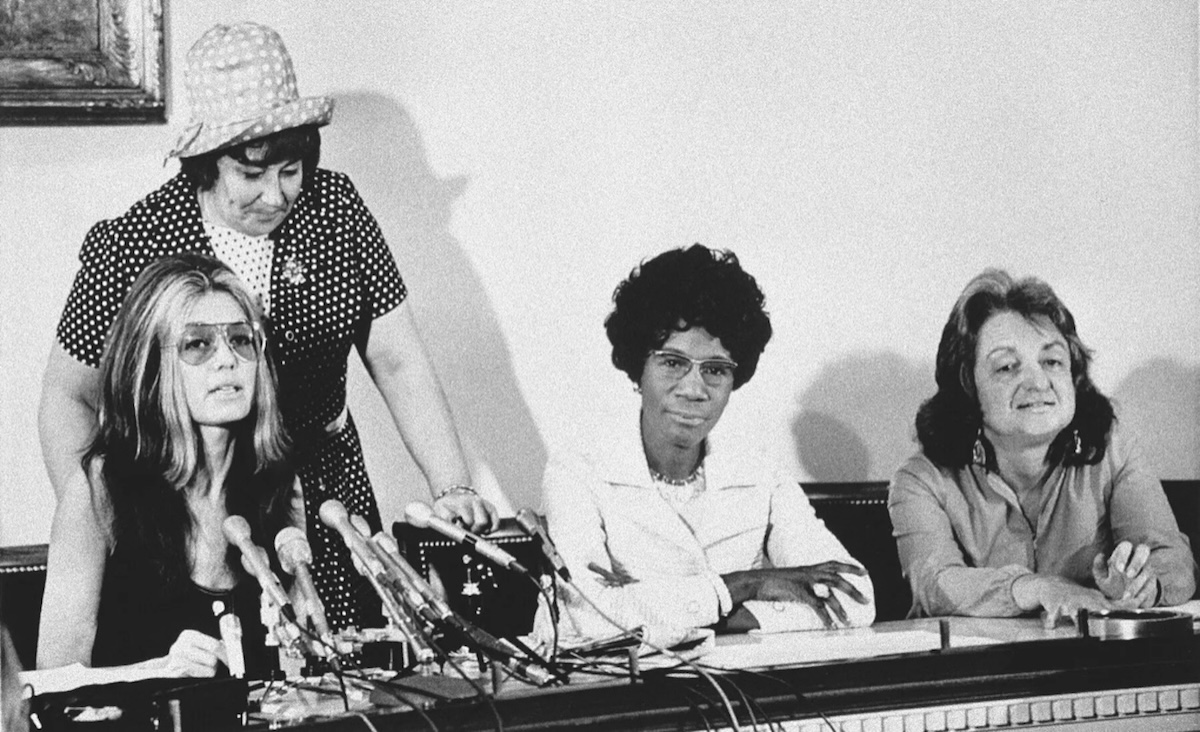

We are the glorias!
I posted this photo by Charles Gorry on Instagram last week, along with my thoughts and feelings about Gloria Steinem’s…
...
SPOILER ALERT: This post references the story line of the film Inside Out.
When the original Pixar animated film Inside Out came out, Pete Docter, the director of the film, told a story on NPR’s Fresh Air of a young boy whose parent worked on the film. The child was terrified to jump off the diving board, and then after seeing the film, was able to do it. When he was asked how he was finally able to jump, the young boy said, “I felt like fear had been driving, and I asked him to step aside.”
Being able to meet the “little voices inside his head” made a life-changing difference in that boy’s life, and frankly, it’s what we do in psychodrama every day. Through the power of psychodrama, you can take what’s going on in your head, personify it, and put it out in the room so that you can work with it.
By having other group members play the roles of those parts or voices, it allows you to dialogue with parts of self, and sort through which voices are helping, and which ones aren’t.
You can fire certain voices, or give them a new job description, or once you fire a voice, you can hire another one. Or before you let them go or integrate them into another part, you can thank them for protecting you as long as they did. It’s your psychodrama. You can do whatever you want!
You see, despite the popularity of IFS – Internal Family Systems – parts work isn’t new. It’s called intra-psychic psychodrama, and we psychodramatists have been using it for many, many decades, long before IFS was created.
In the course of what we call an intra-psychic psychodrama – a drama in which we are working with parts of self, as opposed to an interpersonal psychodrama where you deal with your relationships with others – you can role-reverse. That is, you can step into that other part of yourself – that internal voice – and speak from there, which can often open up feelings, thoughts, ideas, and avenues that were previously blocked.
Typically, we use doubling in the course of that work. And when you’re doubled, a fellow group member or the psychodrama director will take on the same physical posture as you, standing behind you with permission, of course, or sitting and feeling into your experience. They make I statements as though they are you, and then you can repeat or change what was said to make it fit for you.
When you are doubled, it can help you get clear about what you’re thinking or feeling, or uncover something you didn’t even realize was inside of you. When you repeat or change the doubling statement to make it fit for you, it helps you get to the core of the thought or feeling in a way you might not have been able to do yourself and/or it can give you permission to say the things that you might not have ever said.
Being doubled can help you make connections that you didn’t even realize were there. For example, on more than one occasion, when I’ve directed a psychodrama, the protagonist is speaking in an angry way and I might offer a double. “I’m expressing my anger right now, but underneath it, I feel really hurt and sad.”
Now, sometimes that doubling statement is spot on, and the person will soften from their anger and admit they are feeling sad. And sometimes they’re not ready to access that sadness and so they won’t accept the doubling statement, and they carry on with their anger. Or sometimes I get it completely wrong and they want to stay angry.
Now, I have no judgment about how they respond to the double. When I double, it’s as though I’m testing a hypothesis about what might be happening inside of the person. And sometimes I get it wrong, which is exactly why it’s vital that we give permission to the protagonist to change the statement to make it fit for them.
When it comes to sadness, it’s a vulnerable emotion. And in order to reveal and express it, a person has to feel safe enough. In group therapy or individual therapy, that safety gets built over time, so that when the doubling happens, a protagonist may be more likely to receive something, like getting underneath the anger and admitting that they’re sadness.
But it’s important to honor their warm up and their timing. The truth is, some people will do almost anything to avoid their feelings, particularly sadness as was really well represented in the film Inside Out. Even the other characters/feelings in the film – Joy, Fear, Anger and Disgust – worked really hard to keep the character/feeling Sadness out of the picture, and away from the protagonist of the film, Riley.
But sadness is vital. Really, it is. When painful things happen, as was the case in the film, when Riley’s family moved from Minnesota to San Francisco, it made a lot of sense that she was sad. She had been moved away from her home, her school, her friends, her hockey league, and her life as she’d known it for 11 years. But Riley doesn’t want to express her sadness. She turns to other feelings like anger and fear, and it pushes people away rather than allowing them to come towards her.
Anger is a great way to protect yourself and keep people away, and it certainly feels more powerful than the vulnerability of sadness. We work so hard to cover up vulnerability, and it’s exhausting constantly working to override our true feelings. This is captured so beautifully in Inside Out when Riley’s childhood imaginary friend, Bing Bong, is feeling sad.
The character Joy is desperately trying to keep sSadness away from Bing Bong, and yet it’s only when Sadness sits with him for a few minutes and lets him feel his loss, that he doesn’t need to stay in it very long before he’s ready to keep moving forward.
Expressing our feelings fully and deeply can actually be really efficient once we’ve allowed ourselves to drop into them. Contrary to what many people think, feeling sadness deeply doesn’t mean you’re going to get stuck there and never be able to find your way out.
The truth is, your body gets tired, and eventually the tears do stop. And then because grief comes in waves, the sadness will likely return. But it doesn’t mean you have to drown in the tears.
Personally, when I began dialoguing with my anger many years ago in psychodrama, I discovered that while it had been a wonderful defense that protected me, I had little or no access to my sadness or my fear. While the anger had really benefited me at another time in my life, it was now getting in my way of connecting with people.
And so despite my fear, I had to take the risk with safe people – and I can’t stress that enough, with safe people! – to show them my sadness and my fear, and allow them to be with me, and comfort me, and witness me without fixing me. Because of my history of being taught that having a need meant I was too needy or too sensitive, I had been afraid to show anyone my deep vulnerability. But that’s where connection lives, in those intimate and vulnerable moments.
It’s also where the emotional and somatic repair happens. To be seen and comforted and witnessed healed the I’m too sensitive belief that I had grown up with, finally allowing me to understand that people actually wanted to support me if I would let them. And that desire was reciprocal, because there were times where they needed me to witness and comfort and see them.
One of the important things that Inside Out reminded me of is that without sadness in my emotional repertoire, life just doesn’t seem full. There’s a deadness inside in a sense that it’s all just pointless, which is actually depression. It’s only by going into and through the sadness – despite the fear that you’ll get lost in it, or that people will use it against you – that you can find your way to the other side, and actually come back to joy.
I often think of it like being in a car skidding on ice. Your first instinct is to slam on the brakes and steer out of it, but that will only send you into a tailspin. The only way out is through.
You have to gently pump the brakes and steer into it, and eventually you will get to the other side.
Anger pushes people away. Sadness invites them to come closer. Which one will you choose?
So the invitation for this post is to notice: Do you react with anger to avoid sadness? Or sometimes do you react with sadness to avoid your anger?
This material may be protected by copyright.
_____________________________________________________________________________________________________________________________________________
About Jean:
Jean Campbell, LCSW, SEP, TTP, TEP has been bringing together groups of people to heal for over 30 years. She blends her extensive experience in psychodrama, sociometry, group psychotherapy, somatic healing and trauma resolution to offer training for helping professionals, personalized intensives, clinical consultation, and trial preparation consultation. You can find her at theactioninstitute.com, on Instagram at @actioninstitute, and on Facebook at @actioninstituteofcalifornia.
I posted this photo by Charles Gorry on Instagram last week, along with my thoughts and feelings about Gloria Steinem’s…
...
As a follow up to my last post about chatbots, I’ve been thinking a lot about why they’re so popular,…
...