


The compartmentalization of trauma
Last night, I watched an interview that Lady Gaga gave on the Late Show With Stephen Colbert, that was so…
...
There are things I just take for granted sometimes after decades of facilitating psychodramas. So when I listen to interviews like the one I did with neuroscientist Dr. Emily McDonald on Trevor Noah’s podcast, What Now?, I realize that people who aren’t familiar with psychodrama don’t know that we routinely go beyond imagination or visualization, into what we call role training.
As Dr. McDonald said, “When I visualize myself tomorrow, or myself later today, or my best favorite self? What does she do? How does she act?”
According to McDonald, when someone visualizes something, they are, “training the pre-motor area of the brain,” which plans movement rather than defaulting back to old behavior. She used the word training…and it got me thinking about how in psychodrama, we role train people so they can change, and step into their better selves.
Visualization can be an effective way of preparing to step into something, like a big game for a professional athlete, or a speech that you’re giving, or preparing for a job interview.
But in psychodrama:
We go beyond just visualization
We step into the vision and actually experience it.
We inhabit it from the inside out.
Let me take a step back and explain what I mean by roles and role training.
The creator of psychodrama, Dr. Jacob Moreno, defined a role as “a unit of behavior that is observable.” He believed that we exist in relationship, and from the moment we’re born, we are in what he would call a social role, meaning a role that is relational.
We’re someone’s child, grandchild, sibling, etc. As infants, we also step into our first few somatic roles – or roles connected to the body: sleeper, eater, crier, etc.
Lastly, we have psychodramatic roles, which can be fantasy roles, or wished for roles. Sometimes psychodramatic roles are aspirational, too. For example, when I was in graduate school, I had the psychodramatic aspirational role of becoming a licensed clinician.
Role training is the process of stepping into a new role, and then moving through three stages that will help us manifest it.
The first stage is called role taking, which is primarily imitation. I see somebody do something, and I mimic them or imitate them. Babies and children do this all the time, but as adults we do it, too. When I learned to drive a car, I copied my teacher exactly, and that’s a normal part of learning a new role. There’s a lot of thinking in the role taking stage, and not a lot of spontaneity or flow…yet.
When I move into role playing, I build on the imitation, and I’m starting to infuse the role with my own spontaneity and style, so I am in more flow. When I stepped into role training when I learned to drive, I tended to put on my seatbelt before I turned on the car, which was different than how my teacher did it. He would turn his head to the right, and look behind the car when he was shifting lanes, and I leaned forward and used my mirrors to do it.
And then finally, we step into role creation, which is characterized by high spontaneity and almost total flow. And as one of my teachers used to say, I own the role, I don’t have to think about it, I just do it. Nowadays, I never have to thinkabout driving – I just do it, because I’ve been in the role of driver for decades.
Role training typically occurs later in a psychodrama, after we’ve experienced some kind of repair from an earlier time in our lives. But sometimes we don’t need that earlier repair piece, we just want to practice for a new role that we’re trying to step into, and we can practice it with support, in a safe environment.
Learning that role training is a process, and I didn’t have to be perfect in a new role right out of the gate, was such a relief to me. I was used to being judged when I didn’t know how to do something (even though no one had taught me how), so role training allowed me to have far more compassion for myself when I went through the normal and expected struggles someone would have in a new role.
Which brings me back to visualization and training.
By utilizing techniques like scene setting and role reversal, I can help a client use all of her senses to concretize a vision. When she sets a scene representing that vision, she steps into what we call surplus reality – something other than the reality of the moment, and have a felt sense of it, rather than just using her vision.
For an elite athlete, for example, they can set a scene using props, scarves, chairs, people, etc. to actually create that vision, almost like painting a picture or kneading clay into a sculpture, that can capture every aspect of the experience.
Say, for example, you are an elite athlete who is at match point at Wimbledon in your visualization. Let’s call that athlete Natalia. She might use green scarves to represent the court. She might have objects, maybe a stick or a ruler or something to represent her racket.
And maybe she chooses fellow group members to play the roles of the umpire, the ball girl or boy, her opponent, the spectators, etc. Those people are called auxiliaries, and their job is to help the protagonist – the person whose piece of work we’re doing, manifest the concretization of her vision.
As she’s creating that scene, as her director – the person who facilitates the piece – I will help Natalia set it by making requests or asking her questions for her to fully immerse herself in the experience.
I might say something like,
“As you stand behind the baseline, waiting to serve this set point, tell me where the sun is.”
Natalia might respond, “It’s over there,” pointing in a certain direction. And I could tell her, “Notice the sun on your face, notice the temperature, notice the smell in the air. Let yourself reach down for a moment and touch the grass on the court.”
Look around and notice the crowd. Find your family in the stands or find your coach. Really take a moment to take in their faces. They have been with you through so much. The trainings, the injuries, the matches, and they have helped you get here to this moment today. I would keep the pace slow, to allow her who self to take in the experience in that moment.
I might then invite Natalia to reverse roles with her coach – that is, the person playing her coach will come stand in her place and she will go stand in the coach’s place/role. I can ask her in that role of coach, “It’s set point. Tell Natalia what you most want her to hear from you in this moment.” The coach might say something like, “This is your moment, and I can hardly contain my excitement. You’ve worked so hard and you deserve this title?”
When I reverse Natalia back to her own role, I would then instruct the person playing the coach to repeat back what was said, so Natalia can hear it, take it in and integrate it. And then I might instruct her, in this moment, “Natalia, in slow motion, let your hand throw the ball in the air and feel the strength of your shoulder, your arm, your wrist, your hand as you serve.”
“Hear the sound of the ball hitting your racket and then hitting the court on the other side of the net,” as she moves her body to serve the ball. I would further invite her to “Let yourself move your body around the court for this set point, feeling your swing on every return you make.”
And I would instruct the auxiliary playing her opponent to move around the court as well, to represent the volley. And then I might say, “Natalia, as you do this, give us the play by play of this final point.”
And she might say, “I move to the net and I return one shot, two shots. I drop back and return the third shot, and then it finally happens. I hit the ball in the perfect spot, and when my opponent returns it, it hits the net.”
“I hear the crowd erupt and I fall to my knees with gratitude,” as she actually lets herself fall to her knees in action. “I let the victory wash over me and I start to cry, and I look over and I can see my family jumping up and down with excitement.” (I would be a cue to the people playing the role of family members to jump up and down with excitement.)
“I get up and I go to the net, and I hug my opponent (which the person playing the opponent would do in action), and then I go shake the umpire’s hand (which the person playing the role of the umpire would also do).
Natalia gets to experience this moment in this surplus reality by not just visualizing, but by feeling it, seeing it, tasting it, smelling it, and touching it.
This experience is now in Natalia’s muscles, her fascia, her cells, her heart and her soul. When we work create a felt sense of something in action, the protagonist has a greater likelihood of actually manifesting it.
Now, can I guarantee that Natalia is going to win Wimbledon? No, of course not. But she now has muscle memory that can contribute to her upping her game by working harder, because now she knows what it will actually feel like, and if she’s ever at that set point at Wimbledon, she’ll know what to do.
An invitation for this post is to let yourself visualize something that you’re moving towards: An aspirational psychodramatic role.
Let yourself sit or stand or kneel – or whatever position you would be in – and feel your body actually going through the motions of that experience.
If you’re wanting to start jogging, for example, you can stand and slowly raise one leg at a time, and move the corresponding arm that you would when you run. You can feel the strength of your muscles, feel the air moving past you as you do. You can feel your foot planting on the ground with each step, so you’re really get a felt sense of the experience, and so you’re anchoring into your body and your nervous system.
Before you poo poo it, try it. It’s more powerful than you think.
This material may be protected by copyright.
____________________________________________________________________________
About Jean:
Jean Campbell, LCSW, SEP, TTP, TEP has been bringing together groups of people to heal for over 31 years. She blends her extensive experience in psychodrama, sociometry, group psychotherapy, somatic healing and trauma resolution to offer training for helping professionals, personalized intensives, clinical consultation, and leadership workshops. You can find her at theactioninstitute.com
Last night, I watched an interview that Lady Gaga gave on the Late Show With Stephen Colbert, that was so…
...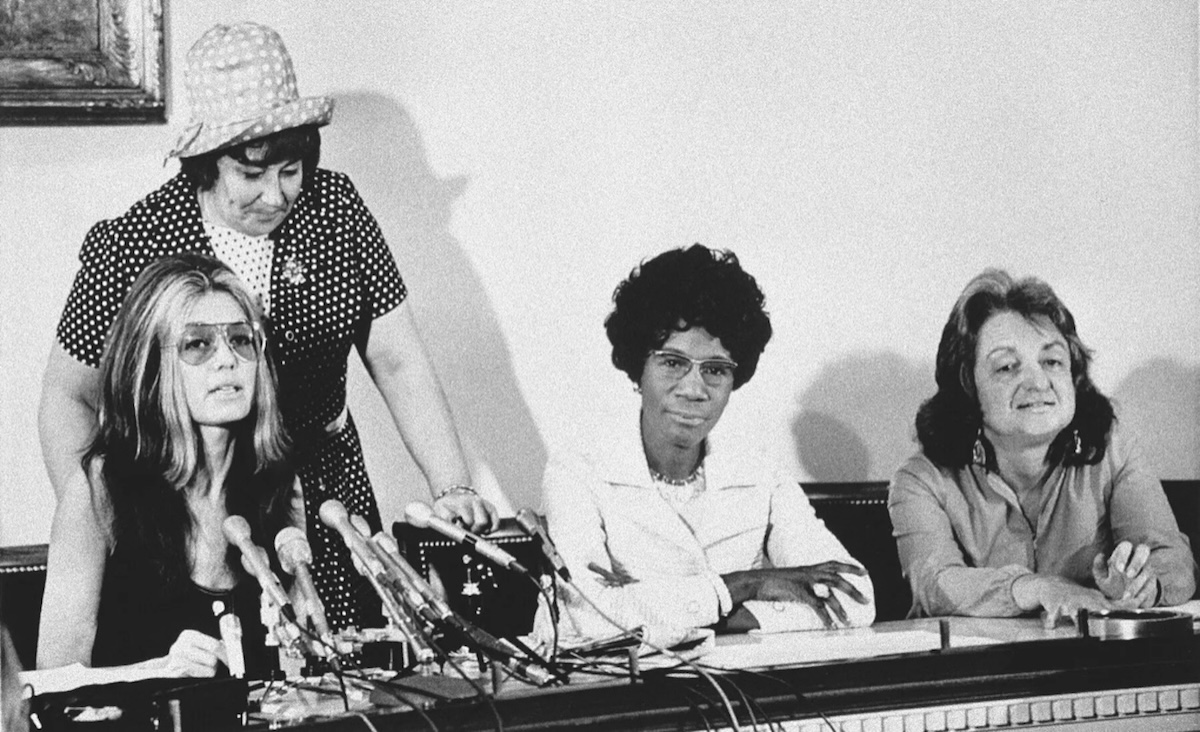
I posted this photo by Charles Gorry on Instagram last week, along with my thoughts and feelings about Gloria Steinem’s…
...